Advanced Microscopy Solutions for Dental Research
Enhancing Insights- 00 years
- 00 months
- 00 days
- 00 hours
- 00 minutes
- 00 seconds
Explore the world of 3D X-ray microscopy and scanning electron microscopy with ZEISS at the National Dental Centre Singapore! Engage with industry experts and leading researchers during an afternoon of insightful talks and introductions. Discover cutting-edge advancements in dental material research while connecting with fellow professionals. Enjoy a complimentary tea break and stand a chance to win exciting prizes in our post-session quiz. Limited seats available – reserve yours today!
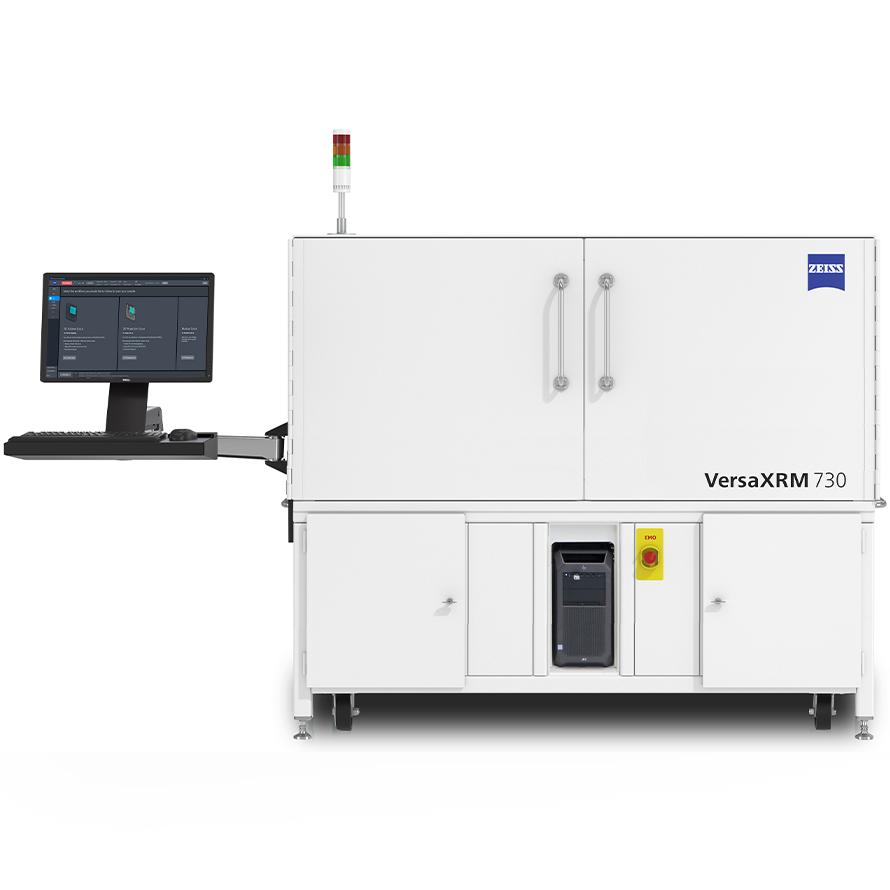
This workshop is a dynamic platform for researchers to exchange their latest findings in dental materials. It will highlight innovative solutions like ZEISS's 3D X-ray microscopy, which enables non-destructive 3D imaging and assessment of in vivo bone regeneration, alongside scanning electron microscopy for detailed material surface analysis. Case studies will feature imaging and analysis of animal tissue samples, natural biomaterials, synthetic biomaterials, and biomimetic materials.
Topics


Non-Destructive 3D Imaging, Advanced AI-driven Analytics and Correlative Microscopy Workflow with ZEISS Xradia Versa X-ray Microscope (XRM)
Dr Sky Xie, ZEISSX-ray Computed Tomography (CT) techniques have opened the door to the non-destructive study of materials' internal microstructure with wide applications across multiple disciplines. ZEISS X-Ray Microscopes (XRM) have incorporated synchrotron technology to provide high resolution and good contrast for 3D imaging of internal microstructures, resolving features from sub-micrometre down to tens of nanometers length scale. The unique ZEISS XRM technology has enabled many advanced analytics features for materials science research. ZEISS XRM's two-stage magnification architecture allows a high-resolution scan to be maintained across a large working distance, which is technically impossible with a conventional geometric magnification-based CT system. This feature is known as the Resolution-across-a-Distance (RaaD). The RaaD feature enables in-situ testing and time-lapse 3D scans with unprecedented imaging quality for direct observation of material as they are exposed to a stimulus such as a load or thermal stress.


Evaluating The Bone Regeneration Effects Of A Novel Scaffold In Mini-pig Alveolar Defects
Dr Lau Chau Sang (Charles), NTUBone grafts are in huge demand globally for bone restoration and alveolar augmentation. Currently, autogenous bone is considered the gold standard for bone grafting, but harvesting bone from another location of the same patient implies additional surgery and risks. Xenografts and allografts are used as alternatives but they pose risks of disease transmission and adverse reaction. To address these limitations, NDCS combined a 3D-printed bioresorbable polycaprolactone tricalcium phosphate (PCL-TCP) scaffold with adipose-derived mesenchymal stem cells (AD-MSCs) harvested, processed and implanted at the time of surgery. Using a porcine model, we proved that the addition of AD-MSCs into the PCL-TCP scaffold improved bone formation in the defect area, compared to the scaffold without cells. Next, we aim to improve the procedure by incorporating additional components to the PCL-TCP scaffold to increase the bioactivity and osteogenic differentiation potential of the scaffold. Together with our A*STAR collaborators and commercial partners, the NDCS team has developed a novel combination scaffold with a proprietary coating of minerals and biological mediator to improve the proliferation and osteogenic differentiation of the seeded AD-MSCs. We tested the novel scaffold in a mini-pig alveolar defect model pilot trial. Using the advanced ZEISS Xradia 620 Versa X-Ray Microscope, we managed to observe enhanced bone formation and reduced bone resorption in the AD-MSC-seeded novel scaffold.


SEM Image of Gecko Skin
Low to Ultra-low kV SEM Imaging of Non-Conductive and Beam Sensitive Biomaterials
Dr Feng Lin NgBiomaterials research frequently involves biomimetic materials that are soft, non-conductive or beam sensitive in nature. When imaging such beam-sensitive or soft materials, it is often necessary to employ low accelerating voltages to prevent material damage. However, reducing accelerating voltages or beam currents typically results in poor image quality and low resolution. On the other hand, while surface coating reduces the charging effect on non-conductive materials, it covers the surface feature of the sample and result in the loss of surface details. In this presentation, we will highlight ZEISS FE-SEM technology featuring beam booster, smart autopilot, and nanotwin lens. These technologies collectively reduce the spread of primary beam, minimize the effect of lens aberration and ensure excellent detection efficiency to support high resolution imaging at low or ultra-low kV without the need for surface coating. Application examples that utilize low to ultra-low kV imaging of beam sensitive and non-conductive biomaterials such as gelatin scaffold and bioinspired materials will be provided for reference.


Rational Design And Fabrication Of Tough Complex Ceramics Suitable For Dental Implants
Dr Rohit Pratyush Behera, NTUBioinspired ceramic microstructures have the potential to fulfil combined unusual properties such as local anisotropy and hardness and bulk strength and toughness, but their current fabrication methods remain challenging. Here, we report a rational design strategy to fabricate dense bioinspired ceramics with complex microstructures that have tuneable mechanical properties and are sintered within minutes. This strategy combines a colloidal directed assembly, i.e., magnetic assisted slip casting (MASC), with templated grain growth (TGG) using pressureless ultrafast high-temperature sintering (UHS). The hierarchical microstructural designs result from the local orientation of alumina micro-platelets coated with Fe3O4 nanoparticles dispersed in a matrix of alumina nanoparticles. We show proof-of-concept ceramic structures that have horizontal, periodic and graded variation of local mechanical properties. Moreover, the microstructure can be tailored as per the requirement for bulk mechanical properties with values of strength and toughness reaching~200 MPa and ~10 MPa.m0.5, respectively. Furthermore, due to the tailorability of properties as well as shape flexibility, this fabrication strategy can be extended to creating dental implants mimicking the enamel and dentin layers without a distinct interface in between. This demonstrates the potential of the fabrication method to create strong and tough ceramic structures in time-saving and energy-efficient ways, opening a new design space for achieving locally tuneable complex microstructures.
Agenda
|
Time |
Topic |
Speaker |
|---|---|---|
|
1.30pm - 2.00pm |
Registration |
|
|
2.00pm - 2.20pm |
Opening Address |
Dr Christina Sim, Research Director (NDCS) |
|
2.20pm - 2.30pm |
Introduction to ZEISS |
Andrew Choo (ZEISS) |
|
2.30pm - 3.00pm |
Non-Destructive 3D Imaging, Advanced AI-driven Analytics and Correlative Microscopy Workflow with ZEISS Xradia Versa X-ray Microscope (XRM). |
Dr Sky Xie (ZEISS) |
|
3.00pm - 3.30pm |
Evaluating The Bone Regeneration Effects Of A Novel Scaffold In Mini-pig Alveolar Defects |
Dr Lau Chau Sang (Charles) (NTU) |
|
3.30pm - 4.00pm |
Tea break |
|
|
4.00pm - 4.30pm |
Low to Ultra-low kV SEM Imaging of Non-Conductive and Beam Sensitive Biomaterials |
Dr Feng Lin Ng (ZEISS) |
|
4.30pm - 5.00pm |
Rational Design And Fabrication Of Tough Complex Ceramics Suitable For Dental Implants |
Dr Rohit Pratyush Behera (NTU) |
|
5.00pm - 5.15pm |
Closing Address |
|


Dr Charles Lau received his Bachelors in Applied Chemistry from the National University of Singapore in 2007. After graduation, he worked in the biopharmaceutical industry for 5 years as a protein purification scientist in Lonza Biologics PLC, United Kingdom, and as a manufacturing biotechnologist in Roche Singapore Technical Operations. Charles returned to academia in 2012, received a Master in Industrial Chemistry from the Technical University of Munich, Germany in 2014 and graduated from NTU in 2019 with a PhD in Bioengineering, under the supervision of Professor Teoh Swee Hin. He is now part of the research team in the SingHealth Duke-NUS Oral Health Academic Clinical Programme, working on biomaterials and animal models for periodontal and oral-maxillofacial regeneration. His PhD work in NTU, which was a collaboration with Dr Yu Na, NDCS, won the best poster award in the Singapore General Hospital 23rd Annual Scientific Meeting in 2019, while his work on bioresorbable scaffolds for alveolar augmentation, under the supervision of Dr Goh Bee Tin, NDCS, won the best poster award in the Singapore General Hospital 24rd Annual Scientific Meeting in 2022.


Dr. Rohit Pratyush Behera is a post-doctoral research fellow in the Mechanical and Aerospace Engineering Department at the Nanyang Technological University (NTU), Singapore. He obtained his PhD in dense bioinspired strong and tough ceramics from NTU itself under Prof. Hortense Le Ferrand with Masters (M.Tech) degree from the Indian Institute of Technology (IIT), Dhanbad, India. He has co-authored several scientific articles in top journals, including Matter, Nature Communications, Journal of the European Ceramic Society, Journal of the American Ceramic Society, Journal of Science: Advanced Materials and devices, etc. His current research interests focus on Damage-tolerant ceramics and their composites with applications in structural, transport, implants, etc.


Sky obtained his B.Eng. (Honors) from Nanyang Technological University (NTU) in 2009. From 2009 to 2015, he worked as a Research Assistant at Temasek Laboratories@NTU while continue to pursue his Ph.D. degree in Materials Science and Engineering. Upon conferred his Ph.D., he carried on working as a Research Scientist at NTU till 2017. His research at NTU focused on the synthesis, sintering, characterization, and mechanical testing of nanostructured metallic, ceramic and composite materials for defense application. Sky joined ZEISS Singapore as a Regional Application Specialist in 2017. He currently focuses on the X-Ray Microscopy, Electron Microscopy and Light Microscopy product segment for materials science application.


Dr. Feng Lin Ng is a Business Development Specialist in APAC for Materials Research at ZEISS Research Microscopy Solutions.
She received her PhD degree in Materials Science and Engineering from the Nanyang Technological University, Singapore focusing on the development of a polymeric cell culture systems. Prior to ZEISS, she worked as a Research Scientist at SIMTech, A*STAR with a focus on polymer process development and its materials-process-properties study for applications in MedTech, Aerospace & Sustainability. She currently supports the business development of Electron & X-Ray Microscopy for Materials Science research in ZEISS.
Location
NDCS Auditorium, Level 8
Register for the ZEISS On Your Campus
Fill up the form belowDon’t miss this opportunity to explore the future of materials science with ZEISS. Register now to secure your spot and be a part of the innovation.